EXPERIENCE THAT SHAPES EVERY PROJECT
More than twenty years helping people create resilient, future-ready homes.
20+
Years in renewable energy and whole-house design
120+
Monitored systems informing design decisions
Off Grid
Specialist in rural, self-build and off-grid homes
Nationally Recognised
Projects featured by BBC, The Guardian & Victron Energy
Independent
Whole-house strategy without product or installer bias
Creator of HEM
House Energy Modelling for comparing design choices before construction
EVERY HOME BEGINS WITH AN IDEA
Working on pioneering projects such as the Active Classroom fundamentally changed the way I think about designing homes.
Every project I work on starts in much the same way.
It starts with a conversation ..
Usually around a kitchen table. Sometimes standing in an empty field. Sometimes looking at an old barn and imagining what it could become.
That early stage matters, because every major decision is still open. The building fabric, heating, electrical design, renewable energy system, battery storage and backup strategy can still be shaped into one complete system.
That is where the greatest value is created.
The Beginning
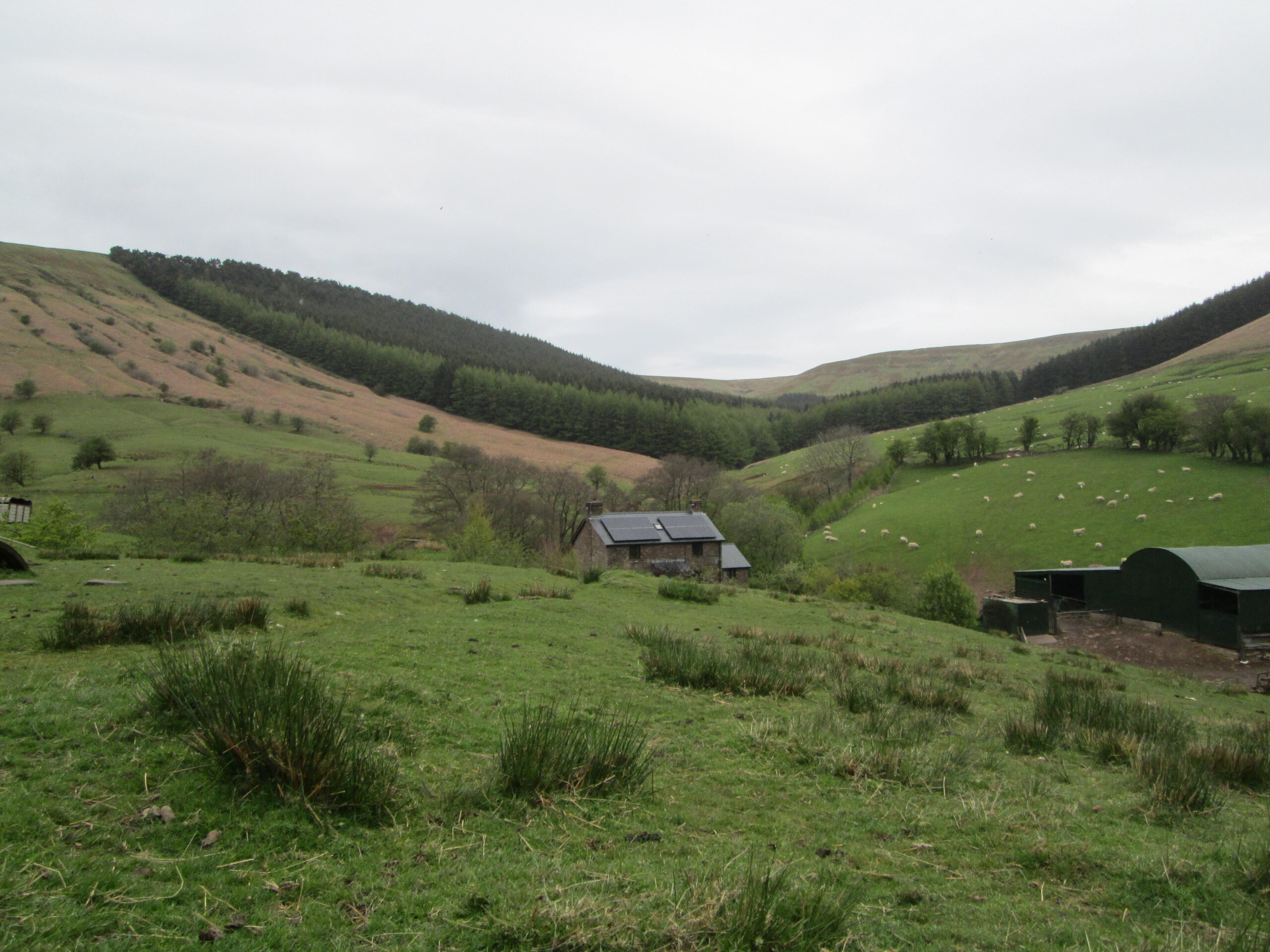
Parc Bach Farm — a remote Black Mountains hill farm where an off-grid energy system and automated backup replaced daily diesel generator use, achieving 87% renewable operation.
“Silence has returned and this is probably my favourite aspect of the project.”
Deborah & Phil, Parc Bach Farm
Parc Bach Farm
It all began with a remote hill farm in the Black Mountains.
Parc Bach Farm sits around 1,500 feet above sea level in the Brecon Beacons National Park. The owners had been quoted £142,000 for a mains electricity connection and £42,000 for a phone line, leaving them entirely dependent on an 11 kW diesel generator.
The generator ran for four to five hours a day, using around 4.5 litres of diesel daily. It was noisy, expensive and limiting. They could not run a fridge or freezer full-time, internet was only available when the generator was running, and the isolation of the site was made worse by the lack of reliable power and communication.
At the time, most people would have seen that as an impossible site.
I saw it as a design problem.
Working with Ecolek Wales, we developed an integrated off-grid energy strategy using solar PV, lithium battery storage, automated generator backup, immersion diversion, remote monitoring and a winter optimisation setting.
The system transformed daily life at the farm. Silence returned, the generator stopped being part of everyday living, and the home achieved 87% renewable operation.
That project changed the direction of my work. It showed me that the best energy strategies are not about installing isolated technologies — they are about understanding the whole home, the people living in it and the conditions the system has to survive.
Turning research into real homes
Returning to Parc Bach Farm with a practical renewable energy strategy confirmed something I had started to believe.
Good design does not begin with products.
It begins by asking better questions.
The completed project went on to receive national recognition for energy efficiency, but the real reward was seeing a family living in a home that no longer relied entirely on a diesel generator.
That experience has stayed with me throughout my career.
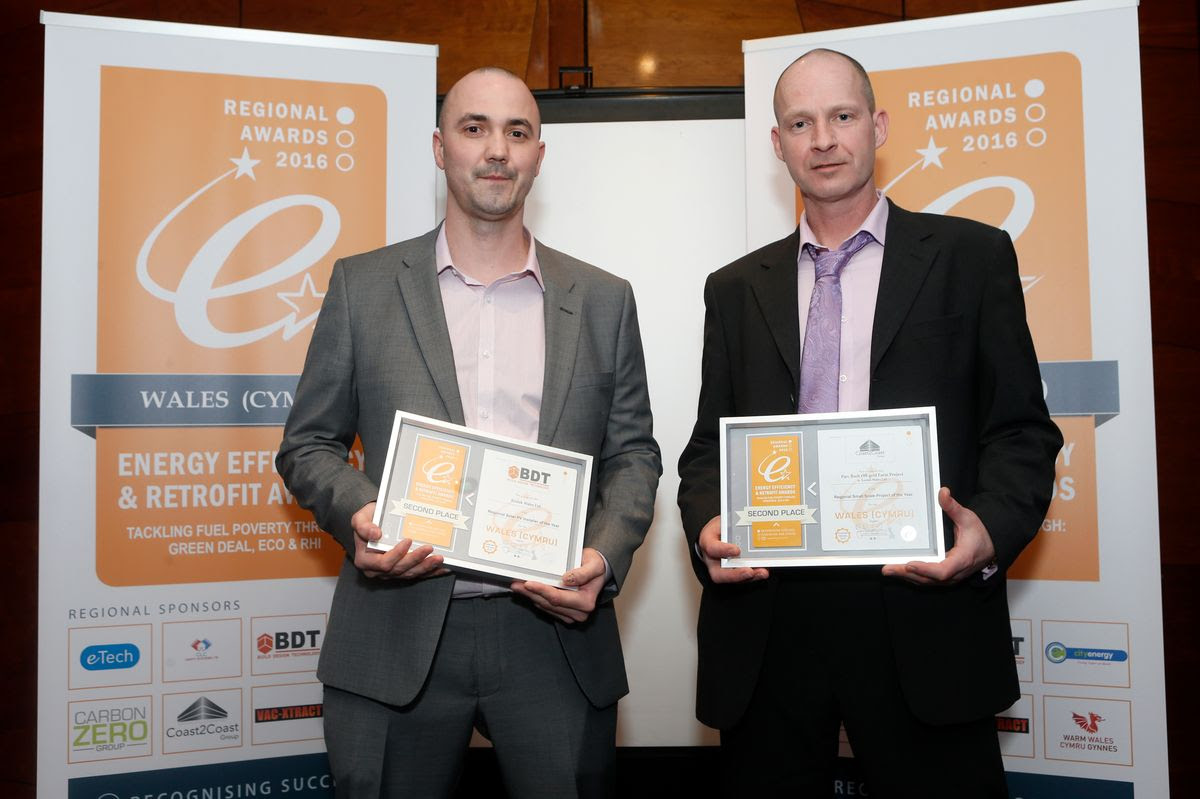
Receiving the Welsh Energy Efficiency Award for Parc Bach Farm after demonstrating a practical whole-house renewable energy strategy.
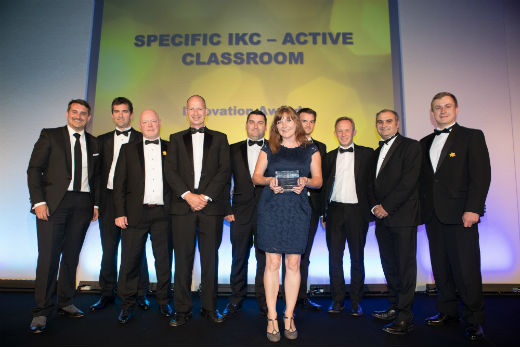
Working alongside the SPECIFIC research team on the Active Classroom — one of the UK’s pioneering energy-positive buildings.
LEARNING FROM PIONEERS
Working on Parc Bach Farm led to opportunities on some of the UK’s most forward-thinking low-energy buildings.
I was fortunate to work alongside architects, engineers and research teams on pioneering projects including SOLCER House and the Active Classroom.
Those projects exposed me to building research, emerging renewable technologies and a completely different way of thinking about energy.
Instead of treating heating, insulation, renewable generation and electrical systems as separate disciplines, they were designed together as one integrated system.
That philosophy still shapes the way I approach every project today.
What this means for your project
When I work with a client today, I am not simply looking at how many solar panels or batteries can be fitted.
I look at the whole home — the building fabric, heating demand, hot water, electrical loads, renewable generation, battery storage, backup power, controls and how the house will actually be lived in.
The aim is to make better decisions before the expensive parts of the build are fixed.
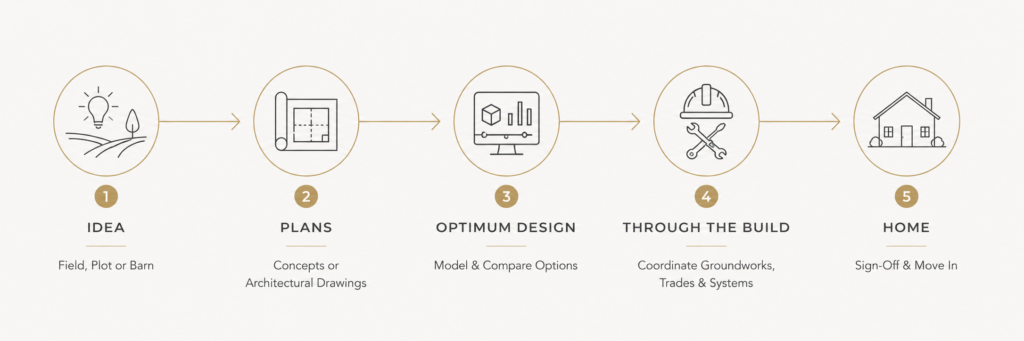
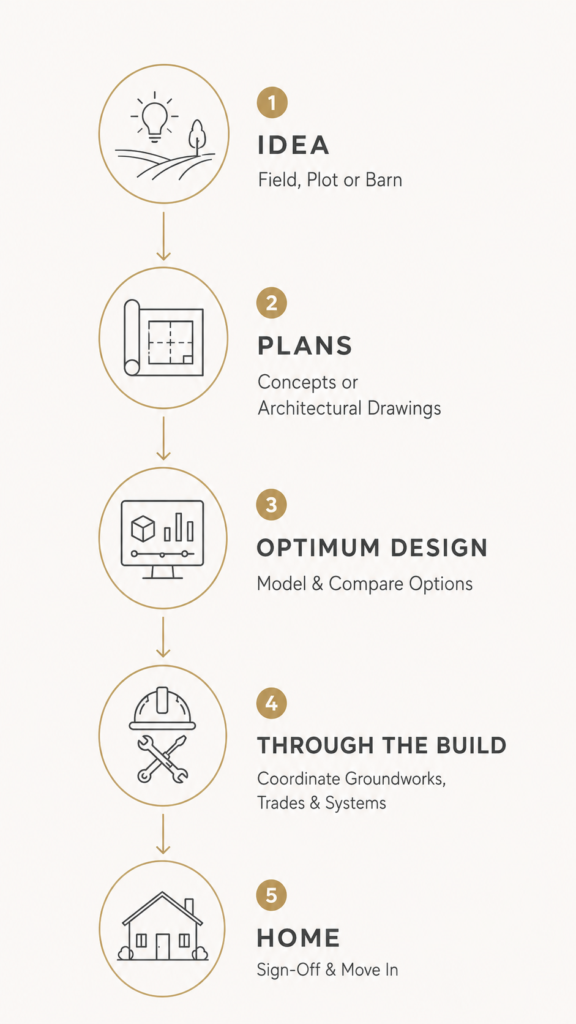
Feasibility Review
Understand whether your site, plans and energy goals are realistic before committing to a direction.
Whole-House Energy Strategy
Compare the building, heating, renewable energy, battery and backup options as one complete system.
Technical Guidance
Support through the build so the strategy is understood by designers, trades and installers.
START THE CONVERSATION
If you are planning a rural, self-build or off-grid home, send a brief outline of your project and what you’d like to achieve.
I personally review every enquiry and take on a limited number of projects each year.